Coursework_California College of the Arts_MArch_Spring 2016
Instructor_Brian Price
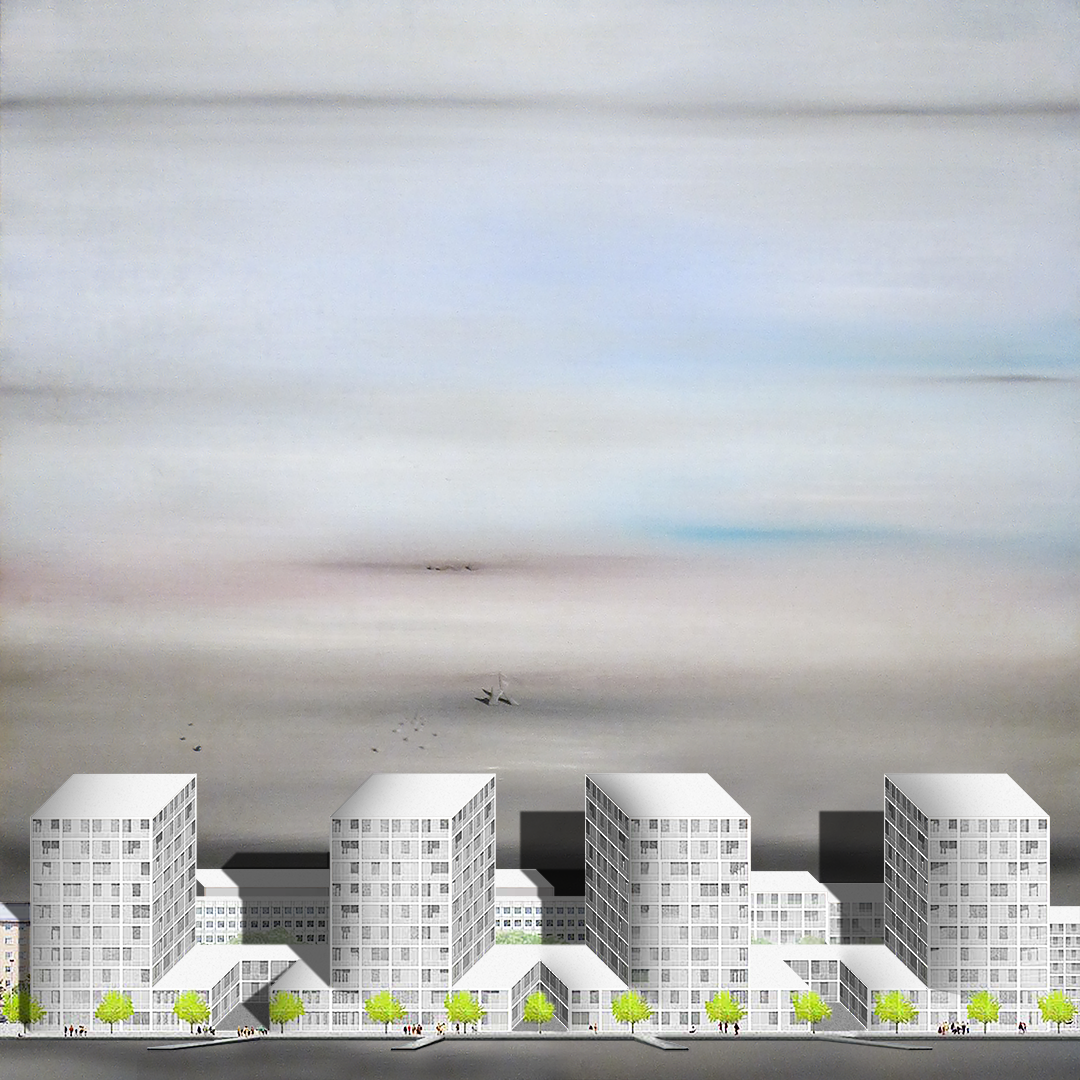
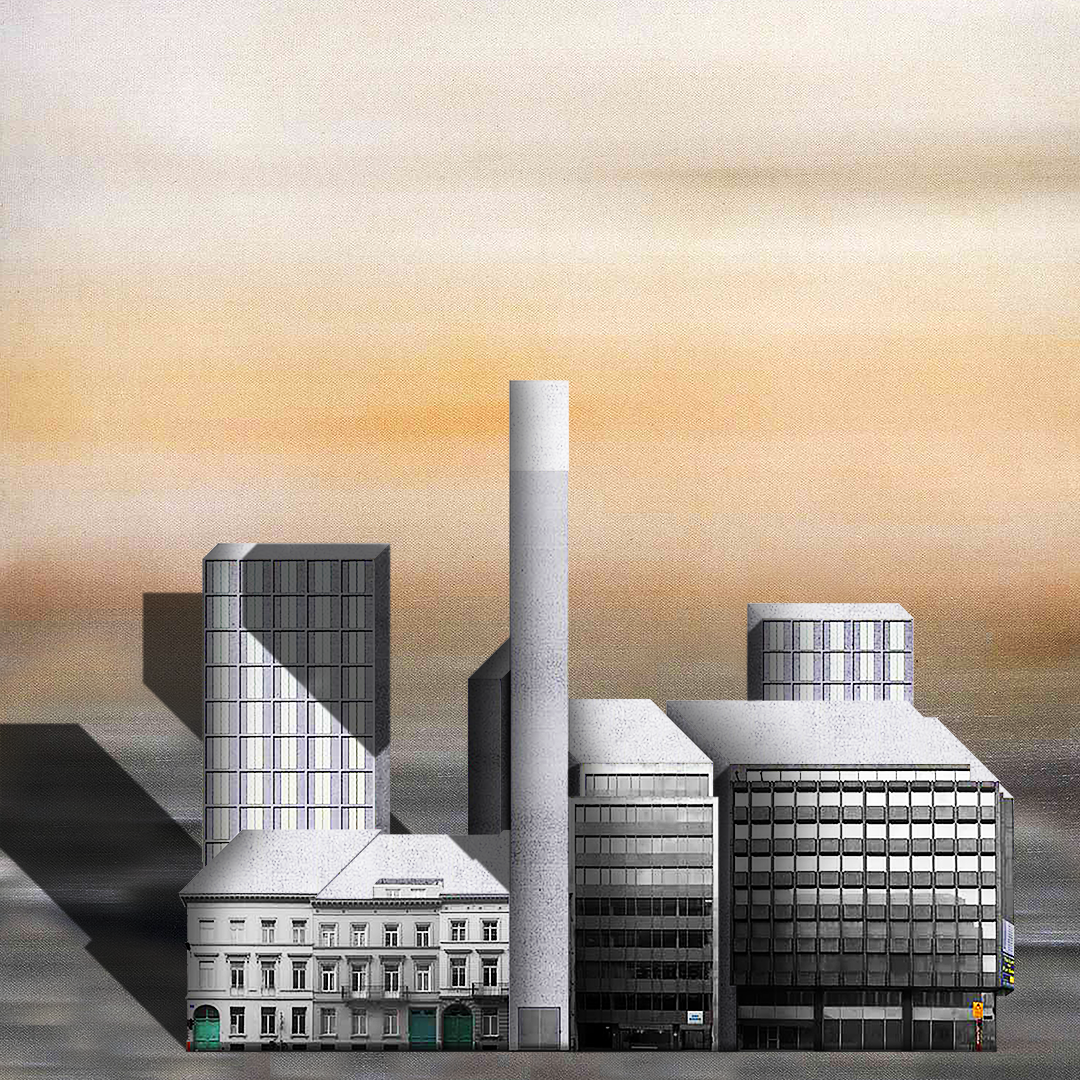
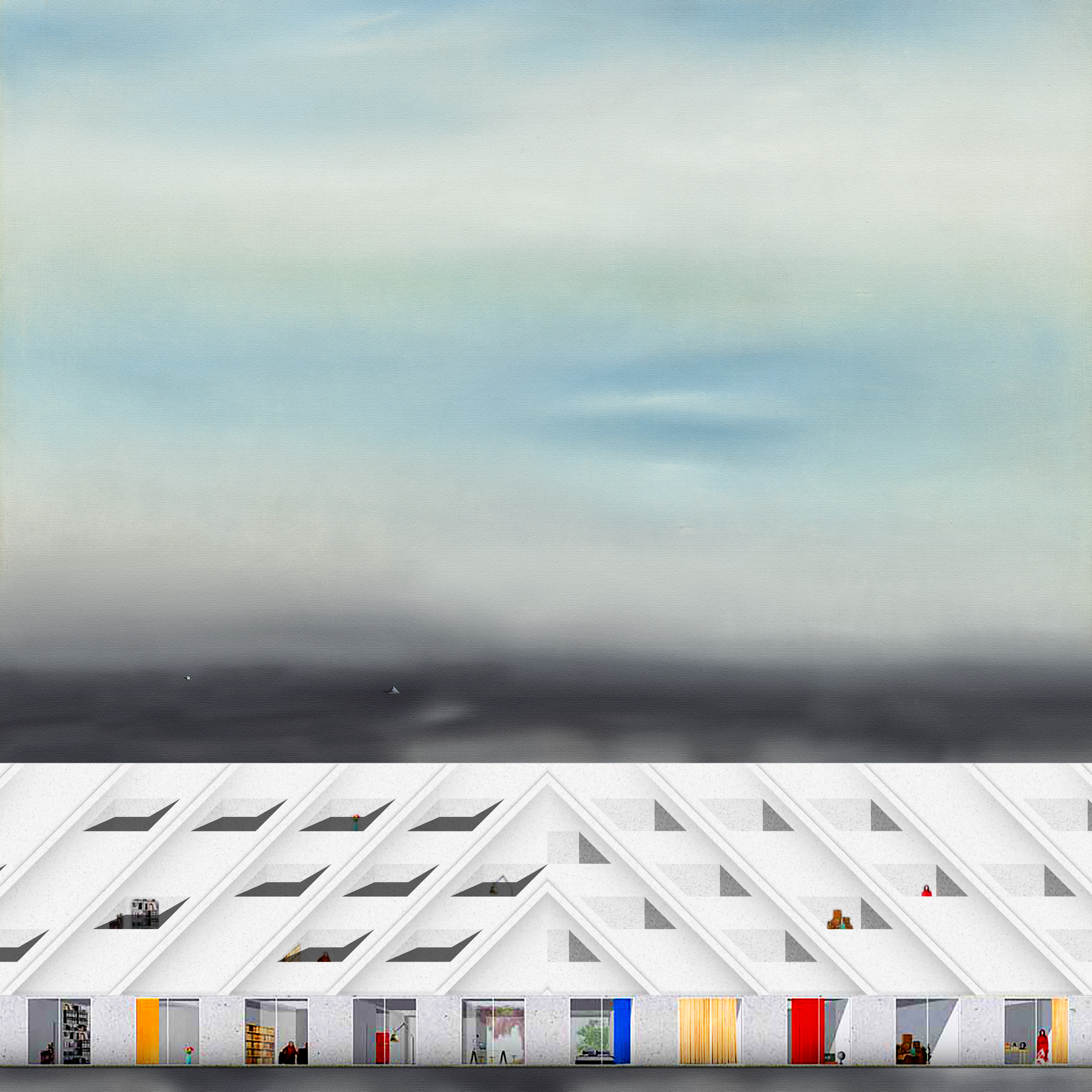
I am interested here in the constructed elevations of the office Dogma, and their potential to be understood as an extension of the project of Surrealism. Dogma has been intentional with these drawings to craft each image in a manner that sets the viewer outside of the scene, where one must look into the architecture from the outside and experience the elevation from a vantage point not familiar to the eye. To achieve this, Dogma renders each façade in perfect elevation, and in perfect symmetry—neither of which are a way we engage a building’s façade. In opposition to this perfection, the content of each drawing is given a hint of perspectival view, making the orientation slightly ambiguous. The content of each drawing is also justified to the bottom of the page, placing the perfection of the elevation in a peculiar context. The architecture itself is undeniably quite banal, and these conventions allow the viewer to experience the every-day designs from a new perspective. Having developed an understanding of the qualities of Dogmas elevations, we can understand them in a Surrealist manner—that is in how their conventions of drawing alter the perception of the content.
One canonical body of Surrealist work that sets a similar stage as Dogma’s elevations are the paintings of Yves Tanguy. Tanguy’s worlds consist of blob form figures resting on an eternal plane of ground and sky, illuminated by a powerful light source located outside of our periphery. The shape of the figures and the fog of their environment blur our ability to read a definitive orientation, but the shadows they create give some notion of ground to the space. As for the figures themselves, they do not represent anything specific, but evoke an open reading from the audience. These qualities of ambiguity in Tanguy’s paintings can then provide a new lens for viewing Dogma’s elevations as surrealist works.
The three drawing here work through methods of appropriation and mash-up to cross-breed Dogma with Tanguy and create a new reading of the original images. Dogma’s elevations are placed in the landscape of Tanguy’s surrealist world, and the atmosphere warps Dogma’s architecture into figures of ambiguity. The angle of view is elevated, revealing the buildings in axonometric form, yet the symmetry of the original remains. This operation fades the viewer’s perception from elevation to perspective to axonometric and intensifies the estrangement of the original orientation. In parallel, Tanguy’s unknown light source casts singular shadows across the drawing fading our reading of the architecture between form and surface. Scale is also made unclear in that each drawing of the triptych differs in scale, thus opening one’s reading of the works to new understandings.
Overall, the three drawings seek to understand Dogma’s technique of rendering through the lens of Surrealism, and challenge our understanding of their architectural ambitions. The buildings, while seemingly ordinary, are displayed as a perfect framework for the life inside and around them. That perfection is altered and challenged by the intervention of human perception, and thus one can engage the work through these new perceptions and participate with it in a new fashion.
 Taylor Metcalf Online